“Some States Get It Wrong More Than Others.”
Not all states are equal when it comes to justice. Data shows that some states have significantly higher numbers of wrongful convictions and exonerations than others.
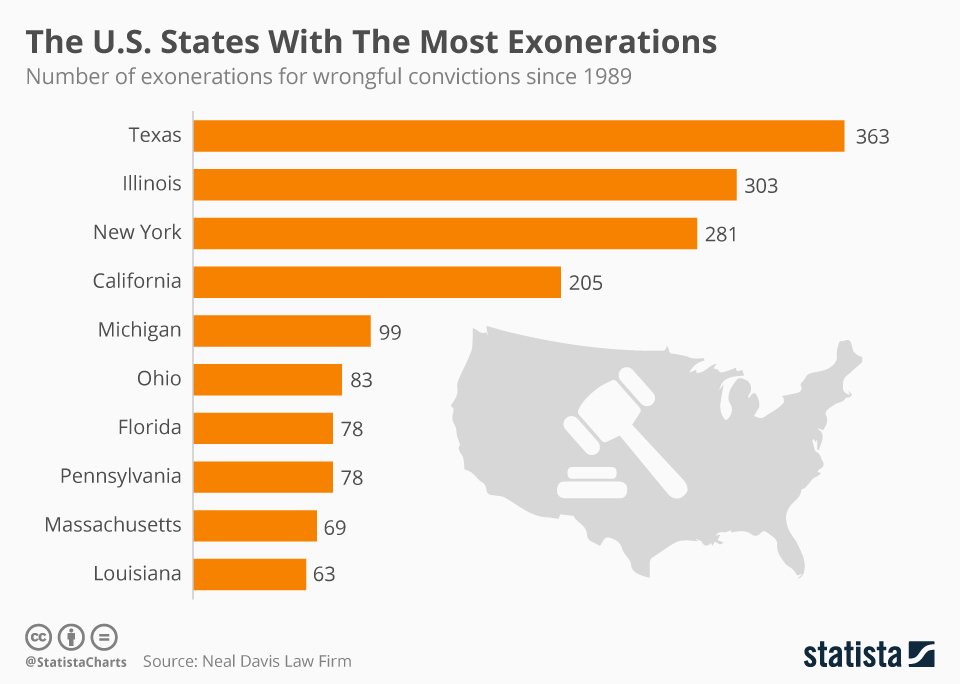
According to recorded exoneration data since 1989, the following states have the highest number of overturned wrongful convictions:
Top States for Wrongful Convictions
#1 – Texas
363 exonerations
Texas leads the nation in wrongful conviction exonerations.
The high number reflects both systemic issues and the scale of the state’s criminal justice system.
#2 – Illinois
303 exonerations
Illinois has one of the most well-documented histories of wrongful convictions, including cases involving false confessions and past misconduct.
#3 – New York
281 exonerations
New York has seen a significant number of wrongful convictions overturned, often involving issues such as unreliable witness testimony and lengthy appeals processes.
#4 – California
205 exonerations
California’s large population contributes to a higher number of cases, with wrongful convictions often linked to procedural errors and complex legal processes.
#5 – Michigan
99 exonerations
Michigan ranks fifth, with a notable number of cases involving wrongful imprisonment and delayed justice for exonerees.
Other States of Concern
- Ohio – 83 exonerations
- Florida – 78 exonerations
- Pennsylvania – 78 exonerations
- Massachusetts – 69 exonerations
- Louisiana – 63 exonerations
Why This Matters
Each number represents a life disrupted—years lost to a system that failed. While exonerations show that justice can be corrected, they also highlight how often it goes wrong.
Demand Change in Your State
How does your state compare?
Understanding the data is the first step toward reform.
- Advocate for fair investigations and trials
- Support policies that prevent wrongful convictions
- Stand with organizations working to restore lives
Take Action
Support the work of the Wrongful Conviction Trauma Center in helping exonerees heal and rebuild.
Donate. Advocate. Speak out.
Justice doesn’t end at exoneration.